 Poke Fun Play
Pokémon Colosseum: Shadow Pokémon and Double Battles in Orre
Discover Pokémon Colosseum’s Orre setting, Shadow Pokémon rescue, Espeon and Umbreon, and the original GameCube battle connections.
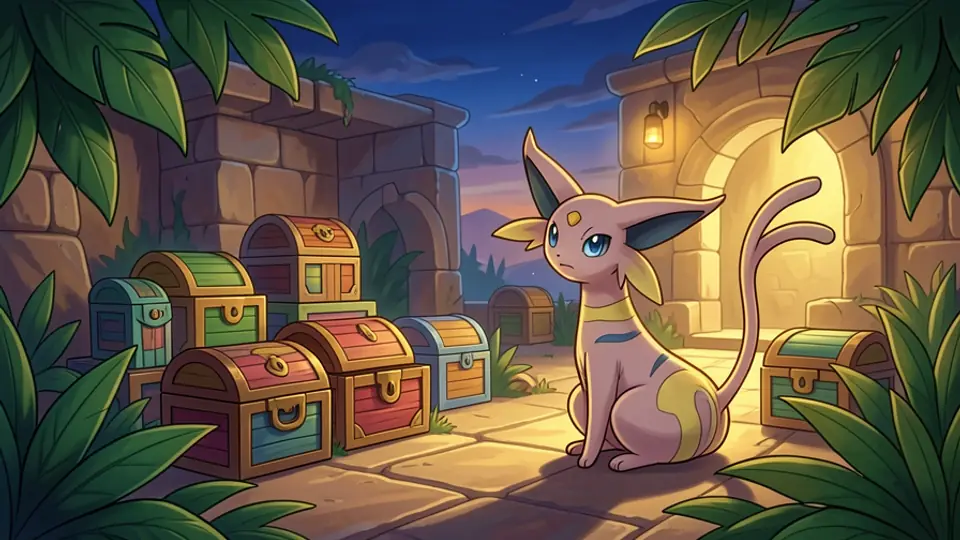
An adventure begins with two unusual companions
Pokémon Colosseum launched in Japan in 2003 and reached Europe in 2004 on Nintendo GameCube. Developed by Genius Sonority, it combines a story adventure with dedicated battle activities. Its setting is Orre, and the protagonist begins with Espeon and Umbreon rather than the familiar choice between a Grass, Fire, and Water starter. Those companions immediately give the adventure a different visual and strategic identity.
The pairing is an effective invitation to think about a team as a relationship between roles. Two familiar evolutions can behave very differently in a battle, even when they share an origin. Our editorial interpretation is that Colosseum’s unusual opening makes established Pokémon feel worth studying again. It does not need to introduce a completely new regional roster to make the player reconsider what a party can do together.
Shadow Pokémon change the purpose of catching
The story centers on Shadow Pokémon, whose hearts have been closed. The protagonist can take these Pokémon from opposing Trainers using a special Snagging mechanism and work toward their purification. A companion helps identify the affected Pokémon. This changes the usual encounter narrative: acquiring a Pokémon is connected to a rescue process, rather than simply adding another wild species to a growing collection.
Consider that premise when deciding whether Colosseum suits your interests. Its appeal lies partly in the condition of an individual Pokémon and the work involved in restoring it. A collection checklist alone cannot describe that relationship. Without spoiling later developments, the game offers a useful counterpoint to a conventional catching journey, inviting the player to recognize a problem in an opponent’s team and respond to it.
The paired battle format asks different questions
Double Battles are central to Colosseum’s identity. Acting with two Pokémon changes the meaning of a move choice because each side has a partner alongside it. Nintendo’s original GameCube description also promotes battle arenas and connections to the Game Boy Advance adventures Pokémon Ruby and Sapphire. Those features belong to the original console and cable setup; they are not evidence of a connection to a present-day mobile app.
A practical way to understand a pair is to ask what each member enables for the other. Can one apply pressure while the other stays available for a different task? What happens if the opposing side focuses on a single partner? Thinking through both possibilities is more useful than assuming two favorite Pokémon will form a balanced team automatically. The shared field makes those questions visible throughout a battle.
Choose history over unsupported modern promises
The original GameCube connection used the relevant Game Boy Advance-to-GameCube cable and compatible software. That is a specific hardware feature, not a universal transfer route. Colosseum should also be distinguished from Pokémon XD: Gale of Darkness, the later GameCube adventure in Orre. The two games share important themes, but they have different protagonists, opening companions, and story situations.
For a new reader, start with the premise and the battle format before investigating older equipment. A game can be valuable to understand even when obtaining a working historical setup requires extra care. Check official announcements separately for any modern rerelease; this article does not assume one exists. Our XD overview continues the Orre discussion, while the Espeon and Umbreon entries explore the species that define Colosseum’s opening partnership.
By the Poke Fun Play editorial team. Facts checked October 4, 2026; analysis and collecting suggestions are our own.
Sources & further reading
- Pokémon Colosseum Japanese official profile · Checked 2026-10-04
- Nintendo European Pokémon Colosseum profile · Checked 2026-10-04
Explore the Pokémon
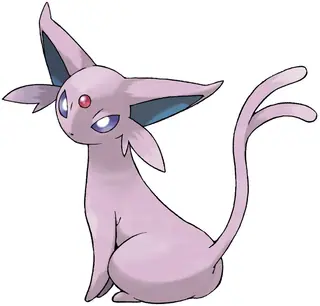 Espeon
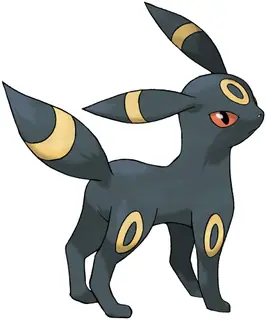 Umbreon
Keep exploring
Related articles
 Video games
Pokémon Art Academy: Drawing Lessons, Reference Images, and Printing
Explore Pokémon Art Academy’s Nintendo 3DS lessons, drawing tools, Free Paint, reference pictures, and ways to continue creative practice offline.
Read article → Video games
Pokémon Battle Revolution: Pokétopia and the Wii Battle Arena
Understand Pokémon Battle Revolution’s Wii arenas, Rental Passes, Diamond and Pearl connections, and the retirement of Nintendo Wi-Fi Connection.
Read article → Video games
Pokémon Black 2 and White 2: Unova After the First Adventure
Understand the 2012 Unova sequels, their changed region, wider Pokémon roster, World Tournament, Pokéstar Studios, and original DS format.
Read article →Related retailers
Coloring books on Amazon · Pokémon cards on TCGplayer
Paid links. As an Amazon Associate I earn from qualifying purchases. We may earn a commission from purchases through our TCGplayer links.