 Poke Fun Play
Pokémon Emerald: Rayquaza, Both Teams, and the Original Battle Frontier
Compare Pokémon Emerald with Ruby and Sapphire, from Rayquaza and the Hoenn story to seven Battle Frontier facilities and original GBA connections.
An expanded Hoenn adventure
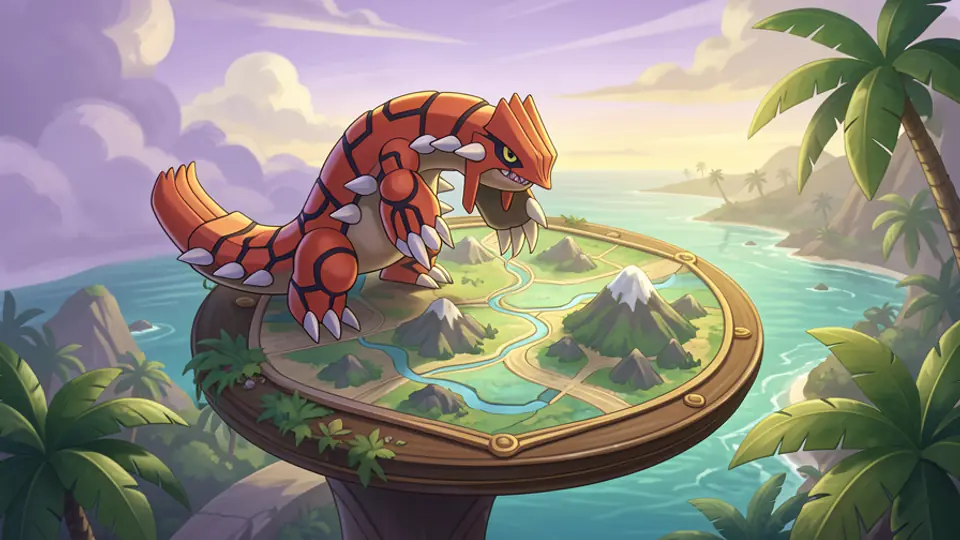
Pokémon Emerald Version is the expanded Generation III Hoenn release for Game Boy Advance. Nintendo records October 21, 2005 as its original European release date. Developed by Game Freak and published by Nintendo, it follows Ruby and Sapphire as a separate game. Treecko, Torchic, and Mudkip remain the first partner choices, while Rayquaza gives the cover and central conflict a different focus.
The main journey still revolves around exploring Hoenn, collecting partners, and working toward the Pokémon League. The important comparison is therefore not whether Emerald is a wholly unrelated adventure. It is whether its additional story emphasis and battle activities are what you want from another trip through the region. An expanded edition has a different purpose from a sequel set after earlier events.
Land, sea, and sky in one conflict
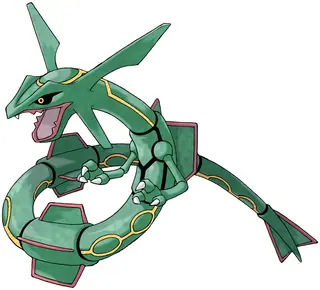
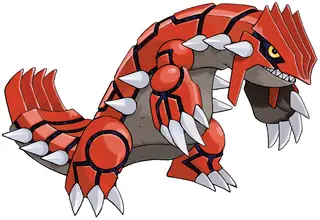
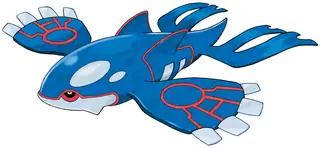
Nintendo's overview emphasizes both Team Magma and Team Aqua, with Groudon and Kyogre threatening Hoenn and Rayquaza offering a way to confront that conflict. This gives the three Legendary Pokémon a connected role. Where Ruby and Sapphire organize their identities around a paired land-and-sea contrast, Emerald puts the sky Pokémon at the center of the wider picture.
For someone interested in Pokémon stories, that is a useful reason to compare the versions without reducing them to a list of exclusive encounters. The same region can tell a differently weighted story when another creature becomes its focal point. Our Pokédex pages introduce the featured species; the game itself supplies the sequence and context of their roles in Hoenn.
Seven facilities, several ways to test a team
Emerald's Battle Frontier features seven facilities and their Frontier Brain competitors. It turns repeated battling into a set of distinct projects rather than a single extension of the Gym journey. The title is often associated with this area because it provides a clear destination for players who want to keep refining their teams after the main adventure.
A useful approach is to select one facility, read its rules, and prepare for that format. Trying to solve every challenge with the same plan can hide what makes the activities different. A favorite story partner may fit one project especially well, while another format encourages a different combination. That is a planning suggestion, not a promise that any particular species guarantees a streak or reward.
The original release has original connections
Nintendo describes both Game Link Cable communication and support for the Game Boy Advance Wireless Adapter. It also lists a connection to Pokémon Colosseum through the Nintendo GameCube Game Boy Advance cable. Those accessory names matter: they refer to different pieces of hardware, rather than a generic wireless feature that every older Pokémon game shares.
Before arranging a connection, check the exact games, systems, accessories, and in-game requirements on both sides. A later console with a similarly shaped port is not evidence of compatibility. Emerald also has no direct HOME connection. A plan to preserve an older partner should be checked as an entire transfer chain, including the announced end of Pokémon Bank, rather than inferred from the cartridge's age alone.
Picking a Hoenn goal
Ruby or Sapphire makes sense when your interest is the original paired adventure and its particular featured Legendary Pokémon. Emerald makes sense when Rayquaza's story role and the seven-facility Frontier are your priorities. Later Hoenn remakes should be considered separately; the region name does not guarantee that every expanded-edition feature is included.
For a replay, choose a goal that changes how you use the region: a new starter, a Contest-focused partner, or one carefully selected Frontier challenge. That gives familiar routes a practical purpose. It also keeps the comparison grounded in features you can identify, without presenting an unsourced ranking of which release is universally better for every player.
By the Poke Fun Play editorial team. Facts checked October 4, 2026; analysis and collecting suggestions are our own.
Sources & further reading
- Nintendo: Pokémon Emerald · Checked 2026-10-04
- Pokémon: Ruby and Sapphire overview · Checked 2026-10-04
- Nintendo: Pokémon Bank end of service · Checked 2026-10-04
Explore the Pokémon
 Rayquaza
 Groudon
 Kyogre
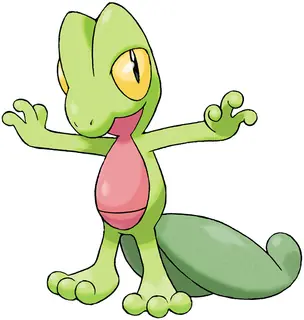 Treecko
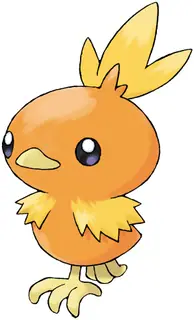 Torchic
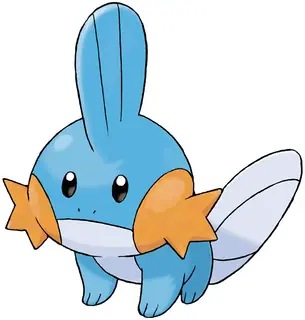 Mudkip
Keep exploring
Related articles
 Video games
Pokémon Omega Ruby and Alpha Sapphire: A New Look at Hoenn
Compare Hoenn's Nintendo 3DS remakes, from Treecko, Torchic, and Mudkip to Primal Reversion, Secret Bases, soaring, and the Delta Episode.
Read article → Video games
Pokémon Ruby and Sapphire: Hoenn, Abilities, Contests, and Version Differences
Discover the original Game Boy Advance Ruby and Sapphire releases: Hoenn starters, double battles, abilities, Contests, and the distinction from later remakes.
Read article → Video games
Pokémon Pinball and Ruby & Sapphire: Catching Through the Table
Compare the original Pokémon Pinball with Ruby & Sapphire, including two-table layouts, evolution, eggs, bonus activities, and the original rumble cartridge.
Read article →Related retailers
Coloring books on Amazon · Pokémon cards on TCGplayer
Paid links. As an Amazon Associate I earn from qualifying purchases. We may earn a commission from purchases through our TCGplayer links.