 Poke Fun Play
Pokémon Puzzle League and Puzzle Challenge: Chains, Combos, and Rising Blocks
Compare the Nintendo 64 and Game Boy Color Pokémon block puzzles, understand chains and combos, and avoid confusing original dates with Virtual Console rereleases.
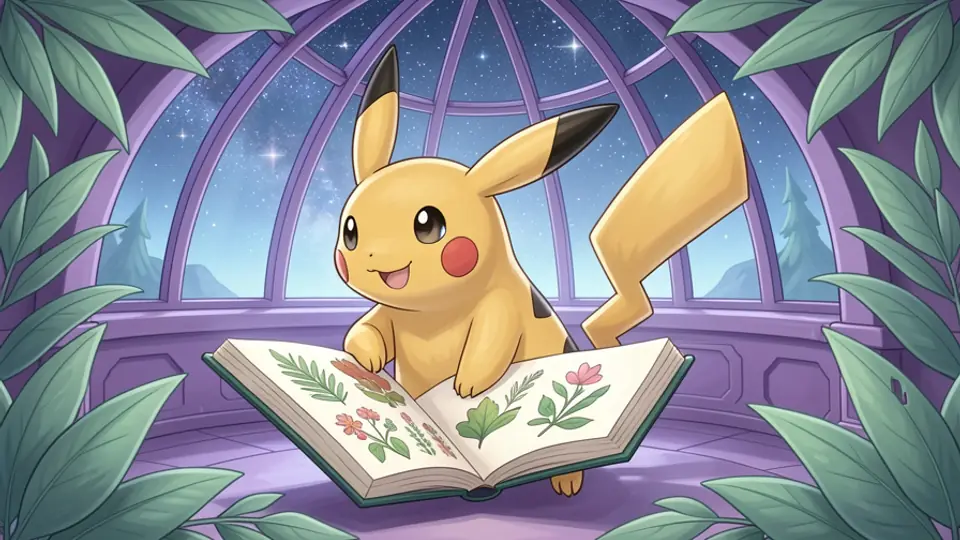
Matching blocks is the main activity
Pokémon Puzzle League and Pokémon Puzzle Challenge use a rising field of colored blocks rather than standard Trainer battles. The player swaps blocks to form matches, with chains and combinations creating stronger results. Puzzle League belongs to Nintendo 64 and reached Europe in 2001. Puzzle Challenge is the related Game Boy Color adventure, with a Johto-associated cast and a more compact handheld presentation.
Our editorial view is that these games are useful examples of a puzzle system retaining its own identity inside a Pokémon setting. Knowing a species’ type does not solve the field of blocks. The meaningful choice concerns what happens when a match clears and the remaining pieces move. A player can enjoy the characters while learning a skill that is quite separate from building a conventional Pokémon team.
A combo and a chain ask for different attention
Nintendo describes matches of at least three blocks, along with larger combinations and consecutive clears. In versus play, attacks can send obstructive material to an opponent’s field. This connects a player’s arrangement decisions with pressure elsewhere in the match. The rising stack also creates an ongoing problem of space: clearing a useful section matters because the board must remain manageable.
When learning, separate the visible match from the arrangement it leaves behind. A clear that looks strong immediately may remove an opportunity for the next step, while a smaller clear can set up a continuation. This is a general way to study falling-block relationships, rather than a hidden technique guaranteed to win. Watch the board after an action instead of judging the action only by the pieces that disappeared.
Puzzle League adds a different viewing challenge
Puzzle League includes a three-dimensional puzzle mode that wraps the field around a cylinder, alongside a tutorial area and two-player competition. Puzzle Challenge offers several modes including Marathon, Challenge, Time Zone, Line Clear, Puzzle, and Garbage. Nintendo’s descriptions show that the games change more than the characters on screen: they vary the goal and, in League’s cylindrical mode, the way the field is viewed.
Choose a mode according to the skill you want to examine. Maintaining a field over time, solving a specific arrangement, and responding to an opponent are different tasks. Moving between them can reveal why a habit works well in one setting and poorly in another. That makes a mode selection meaningful rather than a menu of nearly identical labels, and it gives repeat sessions a purpose beyond pursuing a larger score.
Historical pages contain more than one release era
Nintendo’s Puzzle Challenge page lists a 2014 date for its Nintendo 3DS Virtual Console edition, not the original Game Boy Color launch. Pokémon’s Japanese catalog places the original handheld game in 2000. New Nintendo 3DS and Wii U eShop purchases ended in 2023. For any modern classic-library version, check the current Nintendo listing and membership conditions separately rather than assuming a past download offer is still active.
Compare League for its television-based presentation and unusual cylindrical field with Challenge for its handheld approach and range of goals. Neither needs to be mistaken for a Trainer adventure in order to be interesting. Our Trozei guide looks at Pokémon icons becoming the matching pieces themselves, while Pinball connects collecting to another kind of arcade control. These comparisons show how varied Pokémon puzzle design can be.
By the Poke Fun Play editorial team. Facts checked October 4, 2026; analysis and collecting suggestions are our own.
Sources & further reading
- Nintendo Pokémon Puzzle League profile · Checked 2026-10-04
- Nintendo Pokémon Puzzle Challenge profile · Checked 2026-10-04
- Pokémon Japanese game catalog · Checked 2026-10-04
Explore the Pokémon
 Pikachu
 Chikorita
 Totodile
 Pichu
Keep exploring
Related articles
 Video games
Pokémon HOME: Supported Games, One-Way Transfers, and the Bank Deadline
Understand Pokémon HOME on Switch and mobile, how to check each Pokémon’s eligible games, GO and Bank restrictions, and the February 2027 Bank closure.
Read article → Video games
Pokémon Channel: Pikachu, Television, and a Different Daily Adventure
Explore Pokémon Channel on GameCube, including Pikachu companionship, Pichu Brothers animation, collectible Nice Cards, and creative activities.
Read article → Video games
Pokémon Crystal: Johto, Animated Battles, and Its Virtual Console Differences
Understand Pokémon Crystal as an expanded Johto game, including the first playable female Trainer, animated battle introductions, Battle Tower, and 3DS rerelease.
Read article →Related retailers
Coloring books on Amazon · Pokémon cards on TCGplayer
Paid links. As an Amazon Associate I earn from qualifying purchases. We may earn a commission from purchases through our TCGplayer links.