 Poke Fun Play
Pokémon GO: Exploring, Collecting, Events, and the HOME Connection
A practical overview of Pokémon GO’s location-based collection, PokéStops, Eggs, Team GO Rocket, event planning, and one-way transfers to Pokémon HOME.
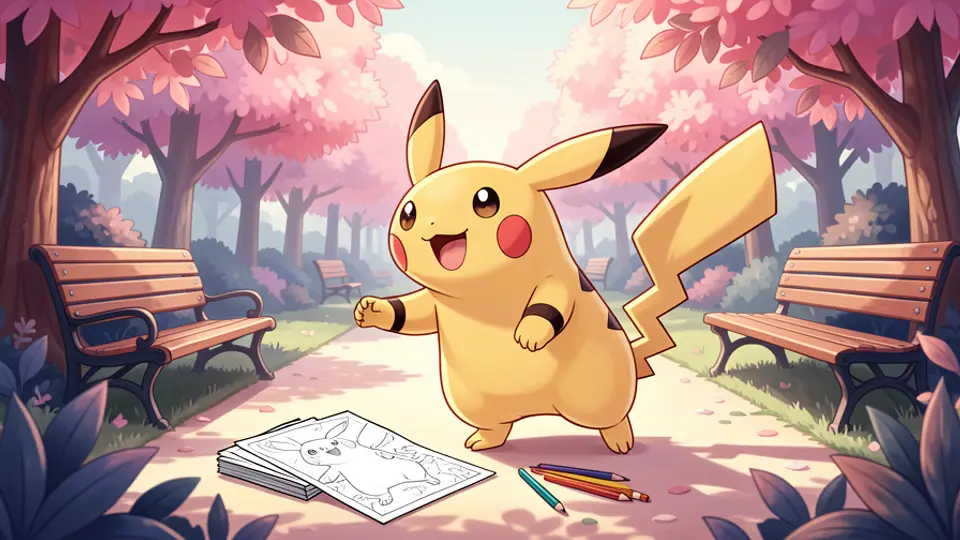
The map is part of the game
Pokémon GO makes real-world locations part of collecting Pokémon on iOS and Android. The official launch announcement dates its first release in Australia, New Zealand, and the United States to July 6, 2016. Niantic created the original location-based experience; the current official site carries Scopely Explore branding. This is a mobile adventure, rather than a remake of one handheld region.
Its central distinction is the relationship between a collection and a place. A walk can provide encounters, items, and progress toward a chosen goal. That makes a useful session different from planning a route through a conventional RPG. Choose a public route that fits the time and access you actually have, then stop somewhere appropriate before concentrating on an encounter or menu.
Several ways to add a partner
The current official overview identifies catching, hatching Eggs, and trading with other Trainers as ways to collect Pokémon. PokéStops and Gyms provide Photo Discs that can supply Poké Balls, Berries, and other items. Team GO Rocket encounters and Special Research add further goals, including rescuing Shadow Pokémon. The collection therefore has more than one source of progress.
A focused outing can favor one goal instead of trying to complete everything at once. You might gather supplies, look for a species relevant to an event, or work toward an Egg-related objective. It helps to review what your collection needs before spending resources. A familiar favorite such as Eevee can be a personal target without assuming that every route will provide that species whenever you visit.
Read events as dated schedules
GO's seasonal announcements and event guides describe particular encounter pools, raid rotations, and bonuses. Those details are useful only within their stated dates and locations. An old event article can explain how a feature was used without describing what is available today. Check the current in-game announcement and official event page before organizing a trip around one Pokémon.
It is useful to separate an evergreen goal from a temporary opportunity. Completing a species entry is a long-term objective; a particular event may make one step more convenient. That distinction keeps an expired bonus from becoming the basis of your whole plan. It also makes a collection easier to manage when several announcements overlap or use different local start times.
What sending to HOME changes
The official support instructions let eligible Pokémon move from GO to HOME after account linking and the HOME mobile tutorial. The transfer uses GO's transporter process, and the Pokémon must then be received in HOME. A HOME Premium Plan is not required for this connection. Once transferred, however, a Pokémon cannot be returned to GO.
Decide whether you want the partner for GO activities or for a compatible destination game before confirming that one-way move. Some Pokémon cannot use the route, and certain rare GO-origin Pokémon have extra registration restrictions in the destination. A species page cannot answer those individual eligibility questions. HOME's own Games it can travel to display is the useful final reference.
Keep the collection goal personal
GO can support very different projects: discovering species, revisiting favorites, following research, or preparing for a particular battle activity. Pick a project that fits how you actually play rather than relying on an unsupported ranking of the most valuable Pokémon. A collection does not need the same priorities as another Trainer's team or event schedule.
Our Pokédex provides types, evolution information, and artwork to explore between sessions. The game and its current support pages determine encounter rules, event availability, and transfer permissions. This overview was checked on October 4, 2026; it intentionally does not present an old raid roster or promotion as a permanent feature. For the next outing, the current announcement matters more than the publication date of a general introduction.
By the Poke Fun Play editorial team. Facts checked October 4, 2026; analysis and collecting suggestions are our own.
Sources & further reading
- Pokémon GO: current official overview · Checked 2026-10-04
- Pokémon GO: first launch announcement · Checked 2026-10-04
- Pokémon: Road to Kalos preparation guide · Checked 2026-10-04
- Pokémon Support: GO to HOME transfers · Checked 2026-10-04
Explore the Pokémon
 Pikachu
 Eevee
 Snorlax
 Mewtwo
Keep exploring
Related articles
 Video games
Pokémon Friends: Small Puzzles, Virtual Plush, Rooms, and DLC Explained
Understand Pokémon Friends’ puzzle-to-plush loop, daily practice, room decorating, Switch and mobile versions, and the difference between the base pack and paid DLC.
Read article → Video games
Pokémon Sleep: Sleep Styles, Snorlax, Helpers, and Compatible Devices
Understand Pokémon Sleep’s daily research loop, Sleep Style Dex, Snorlax’s Drowsy Power, helper Pokémon, and current phone and smartwatch requirements.
Read article → Video games
Pokémon Let's Go, Pikachu! and Eevee!: Catching, Partners, and Shared Play
Explore Let's Go's Kanto adventure, partner Pokémon, approachable catching controls, two-player Support Play, and Pokémon GO connection.
Read article →Related retailers
Coloring books on Amazon · Pokémon cards on TCGplayer
Paid links. As an Amazon Associate I earn from qualifying purchases. We may earn a commission from purchases through our TCGplayer links.