 Poke Fun Play
Pokémon Let's Go, Pikachu! and Eevee!: Catching, Partners, and Shared Play
Explore Let's Go's Kanto adventure, partner Pokémon, approachable catching controls, two-player Support Play, and Pokémon GO connection.
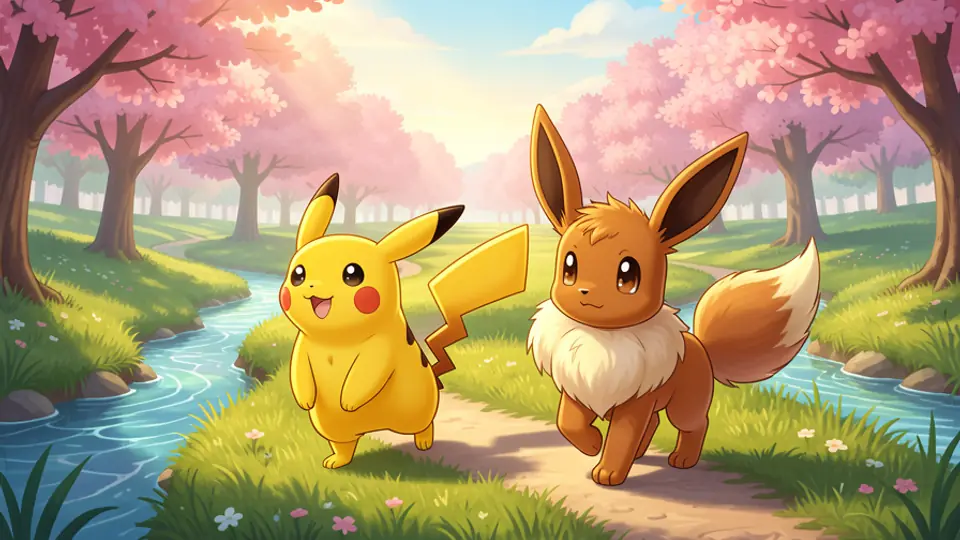
Kanto with a partner at the center
Pokémon: Let's Go, Pikachu! and Pokémon: Let's Go, Eevee! are Nintendo Switch adventures released in November 2018. They revisit Kanto with Pikachu or Eevee as the central partner, depending on the version. The familiar region gives returning players recognizable places, while the partner-focused presentation and catching approach provide a different introduction for newcomers.
These games should be understood as their own version of a Kanto adventure, rather than assumed to reproduce every system from the Game Boy originals. A familiar town name or Pokémon does not guarantee an identical encounter list or progression detail. The official Pokémon preview explicitly compared its experience with Pokémon Yellow while noting differences. That is a useful way to approach the games: recognizable foundations, with deliberate changes.
Catching and battling have different controls
Wild Pokémon are encountered in the field, and catching uses aimed Poké Ball throws with timing around a shrinking target ring. A Joy-Con can be moved for a throw; in handheld mode, the system is used to aim and the A Button to throw. Trainer battles still use party Pokémon and move commands. Knowing that distinction avoids expecting every wild encounter to begin with the same conventional battle sequence as older entries.
For someone helping a new player, it is useful to practice the catch interaction separately from explaining type matchups. One asks for aiming and timing, while the other asks for decisions about moves and opponents. Combining both explanations into a long list can make the game seem more complicated than the activity currently on screen. Start with the immediate task, then connect it to the larger collecting or battle goal.
What two-player Support Play does
Support Play lets a second player join the adventure. Both can participate in catching, and a synchronized throw can improve the catch attempt. In Trainer battles, both players can issue commands to Pokémon. This provides a shared way to help with the same journey, rather than requiring a separate full adventure for each person on the screen.
Local support on one system should be distinguished from trading or battling between systems. The official guide describes local communication and internet communication as separate options, with Nintendo Switch Online required for the internet-based battle and trade features. Choose the activity first, then check its controller, console, and service requirements. The phrase two players does not describe every multiplayer mode equally.
The Pokémon GO connection and version choice
Eligible Pokémon originally discovered in Kanto can be brought from Pokémon GO to the Let's Go games through the GO Park system. This connection makes the games relevant to mobile collectors as well as players returning to Kanto. Meltan and Melmetal are also associated with the relationship between these games and GO. Transfer rules deserve their own instructions, because moving a Pokémon is a different operation from an ordinary catch within the Switch adventure.
Choose Pikachu or Eevee by considering the partner you want to spend the journey with, then check the available version-exclusive Pokémon. A favorite partner is a more durable reason for a choice than assuming that the two versions have completely different stories. For collecting goals, the exclusives and communication options matter; for shared play, the Support Play setup is the more immediate question.
As an editorial comparison, Let's Go illustrates accessibility through changing a familiar interaction rather than removing the entire adventure. It still offers a region to explore and battles to understand, but its catch loop has a different rhythm. Comparing it with modern open-world entries is most useful when you focus on those concrete interactions, rather than ranking every Pokémon game on one universal scale.
By the Poke Fun Play editorial team. Facts checked October 4, 2026; analysis and collecting suggestions are our own.
Sources & further reading
- Official Let's Go overview · Checked 2026-10-04
- Official Let's Go controls and multiplayer guide · Checked 2026-10-04
- Official Let's Go connection with Pokémon GO · Checked 2026-10-04
- Official Pokémon preview and release date · Checked 2026-10-04
Explore the Pokémon
 Pikachu
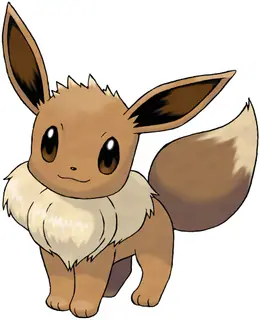 Eevee
 Meltan
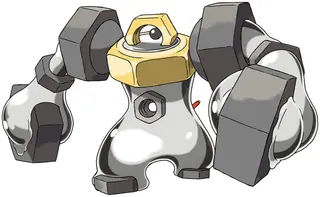 Melmetal
Keep exploring
Related articles
 Video games
Pokémon Mystery Dungeon: Which Adventure Fits Your Interests?
Compare Rescue Team, Explorers, Gates to Infinity, Super Mystery Dungeon, and Rescue Team DX without confusing their worlds or current availability.
Read article → Video games
Pokémon Café ReMix: Linking Puzzles, Café Staff, and Platform Save Rules
Explore Pokémon Café ReMix’s swirling icon puzzles, Pokémon staff, recipe goals, Switch touch controls, and the important limits on moving saves between platforms.
Read article → Video games
Pokémon Friends: Small Puzzles, Virtual Plush, Rooms, and DLC Explained
Understand Pokémon Friends’ puzzle-to-plush loop, daily practice, room decorating, Switch and mobile versions, and the difference between the base pack and paid DLC.
Read article →Related retailers
Coloring books on Amazon · Pokémon cards on TCGplayer
Paid links. As an Amazon Associate I earn from qualifying purchases. We may earn a commission from purchases through our TCGplayer links.