 Poke Fun Play
Pokémon Mystery Dungeon: Red and Blue Rescue Team Explained
Understand the original Rescue Team games, their Game Boy Advance and DS formats, turn-by-turn dungeons, and the later Red Rescue Team rerelease.
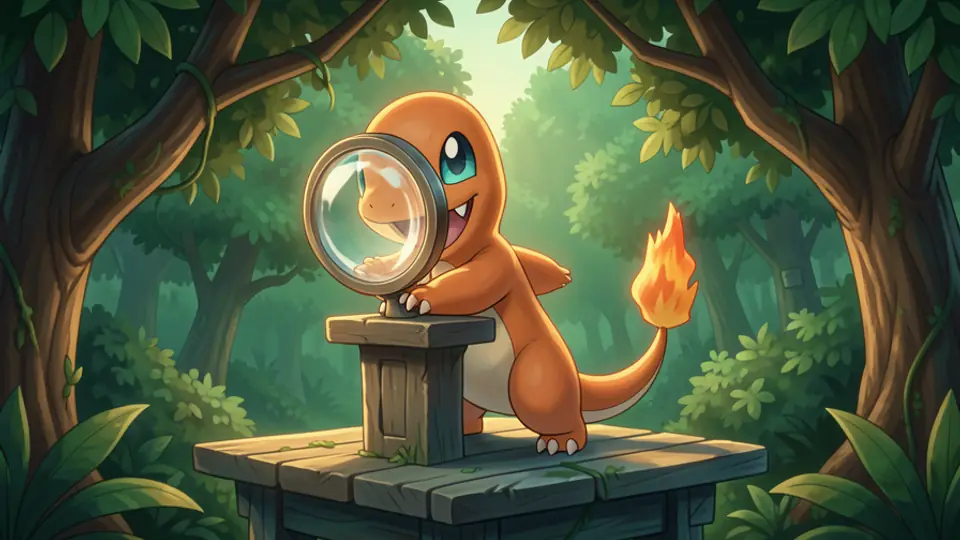
Two formats introduce the rescue partnership
Pokémon Mystery Dungeon: Red Rescue Team and Blue Rescue Team launched in Japan in 2005, followed by their Western releases in 2006. Red belongs to Game Boy Advance, while Blue was made for Nintendo DS. Both introduce an adventure in which a human becomes a Pokémon and forms a rescue team with a partner. That shared premise matters more than treating the two colors as separate regional journeys.
An ordinary Pokémon adventure places a Trainer between the player and the party. Rescue Team removes that distance: the protagonist is part of the Pokémon community. Our editorial interpretation is that the change makes assistance and companionship feel central to the journey. Choosing an entry point therefore involves more than asking which species are available. It also involves deciding whether you want to inhabit that different perspective.
A dungeon is a sequence of small commitments
Dungeon exploration uses a turn-by-turn structure. Movement and actions advance the situation, while the layout changes between visits. The original manuals explain the systems and items used during these expeditions. A route through a floor is therefore a continuing decision, not simply a space to run across until the next battle begins. The changing layout also prevents memorizing one exact path from solving every visit.
Before entering, decide what the expedition is for and what you are willing to risk. Inside, pause when a new room changes the situation. Advancing because a corridor looks harmless is different from advancing after checking the party’s condition. This habit is a useful way to understand the format without reducing it to a long equipment checklist. A slower choice can be more efficient than recovering from a rushed one.
Rescue features belong to the original communication systems
The original games include friend rescue features, with passwords providing a way to communicate rescue information. Nintendo’s manuals explain which functions depend on a particular form of connection. Red and Blue also have hardware-specific details because one was designed for Game Boy Advance and the other for Nintendo DS. Those differences should be checked in the relevant manual rather than guessed from the shared story.
For a historical setup, identify the exact feature you want before obtaining an accessory. A password rescue and a direct local connection are not the same thing. Nor does access to a modern rerelease prove that every original communication feature works unchanged. The practical question is specific: which game, which version, and which method? That approach avoids promising a connection merely because two titles belong to the same pair.
Red Rescue Team returned through Nintendo Switch Online
Red Rescue Team joined Game Boy Advance – Nintendo Switch Online in August 2024, requiring Nintendo Switch Online + Expansion Pack. This announcement concerns Red, not a Nintendo DS rerelease of Blue. Pokémon Mystery Dungeon: Rescue Team DX is another option on Nintendo Switch, but it reimagines the original adventure instead of reproducing the Game Boy Advance cartridge unchanged. These are separate ways to revisit the rescue premise.
The originals are useful for understanding how the series began; DX is useful for seeing how that foundation was reconsidered. Neither choice needs to be framed as collecting the largest roster possible. A partnership, the next rescue request, and the consequences of a small turn are the heart of the format. Our DX and series overview articles explain those connections without requiring you to learn later story revelations first.
By the Poke Fun Play editorial team. Facts checked October 4, 2026; analysis and collecting suggestions are our own.
Sources & further reading
- Nintendo Blue Rescue Team manual · Checked 2026-10-04
- Nintendo Red Rescue Team manual · Checked 2026-10-04
- Pokémon Red Rescue Team Nintendo Switch Online announcement · Checked 2026-10-04
- Rescue Team DX official site · Checked 2026-10-04
Explore the Pokémon
 Pikachu
 Bulbasaur
 Charmander
 Squirtle
Keep exploring
Related articles
 Video games
Pokémon Café ReMix: Linking Puzzles, Café Staff, and Platform Save Rules
Explore Pokémon Café ReMix’s swirling icon puzzles, Pokémon staff, recipe goals, Switch touch controls, and the important limits on moving saves between platforms.
Read article → Video games
Pokémon Quest: Tumblecube Island, Cooking, and Power Stones
Learn Pokémon Quest’s block-shaped expeditions, cooking-based recruitment, Power Stones, optional purchases, and the limit on Switch-to-mobile saves.
Read article → Video games
Pokémon Red and Blue: Kanto, the Original Starters, and the Collection Idea
Explore the original Game Boy Red and Blue releases, their Kanto journey, starter designs, paired-version collecting, and historical rerelease connections.
Read article →Related retailers
Coloring books on Amazon · Pokémon cards on TCGplayer
Paid links. As an Amazon Associate I earn from qualifying purchases. We may earn a commission from purchases through our TCGplayer links.