 Poke Fun Play
Pokémon Yellow: Pikachu as a Partner and the Original Kanto Follow-Up
Discover Pokémon Yellow: Special Pikachu Edition, its following Pikachu, updated Game Boy presentation, Surfing Pikachu activity, and historical 3DS rerelease.
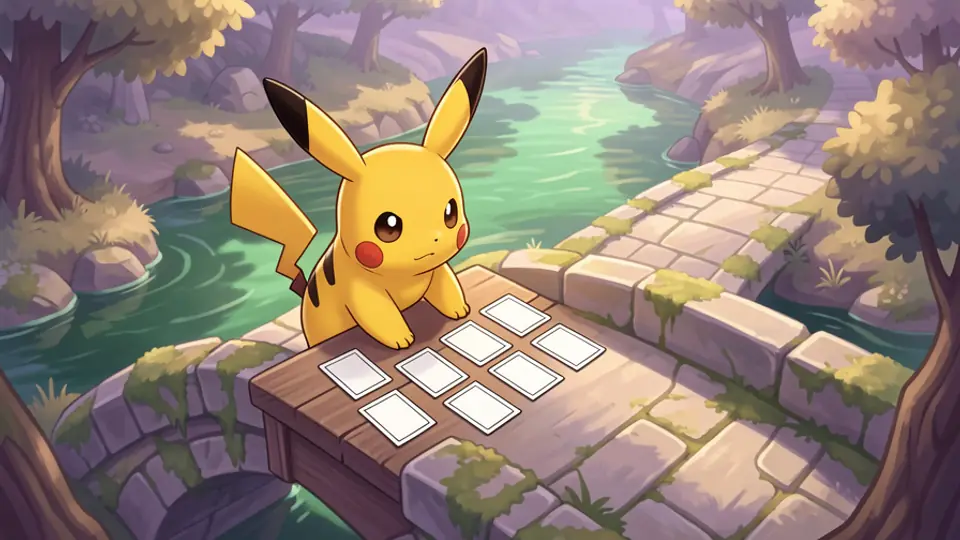
A familiar region with a different first partner
Pokémon Yellow Version: Special Pikachu Edition returns to Kanto on Game Boy with Pikachu as its defining companion. Nintendo records June 16, 2000 as its original European release date. Developed by Game Freak and published by Nintendo, it belongs to Generation I and follows Red and Blue. The full subtitle is useful when distinguishing the original release from later games also associated with Pikachu.
The broad adventure remains recognizable: explore Kanto, raise a team, and progress through its challenges. Pikachu changes the opening relationship, however. Red and Blue offer a choice between three first partners; Yellow builds its identity around one particular Pokémon. That makes it an interesting comparison for players who care about the feeling of traveling with a companion as much as filling a collection.
Following makes the partnership visible
Pikachu follows the Trainer during the journey. A partner usually represented in menus or battles becomes visible in the spaces between them. That presentation gives an ordinary route a second presence and makes the companion relationship easier to notice. It is one of the clearest differences identified in Nintendo's official overview of the game.
Pikachu was not originally one of Red and Green's three first partner choices. The official creator interview instead describes it as a wild Pokémon in those games. Yellow's focus therefore illustrates how a species can grow from one encounter among many into the center of another release. It is a useful piece of design history without requiring a claim that every subsequent Pikachu game plays the same way.
Artwork, sprites, and a surfing activity
Nintendo describes Yellow's graphics as a slight update from Red and Blue and identifies Surfing Pikachu as one of its additional activities. The existence of that activity should be separated from its particular unlocking requirements. A brief overview is not a promise that every new save immediately provides every minigame, especially when historical accessories or rerelease differences can affect access.
Looking at the game's sprites beside modern artwork gives the small changes a useful context. A species can remain recognizable across very different visual treatments. The point of the comparison is not to dismiss an old sprite for lacking detail, but to notice how silhouette, expression, and placement communicate identity within the restrictions of a small screen.
Which edition are you looking at?
Yellow later received a Nintendo 3DS Virtual Console release on February 27, 2016. Nintendo's page notes that new Nintendo 3DS eShop purchases ended on March 27, 2023. A currently visible product page therefore documents the release but does not demonstrate that a new purchase is still available on that store. Existing ownership and redownload support are separate questions.
The original cartridge also belongs to the hardware history of Pokémon Stadium, whose N64 Transfer Pak supported the early handheld games. That connection should not be assumed for every modern rerelease carrying a familiar name. When checking an accessory or transfer route, identify the console, edition, and software on both sides before comparing the species you hope to use.
A replay centered on a companion
Yellow is a useful choice when you want to examine the earliest visible Pikachu partnership within the core adventure. Red and Blue provide the earlier paired-version comparison, while HeartGold and SoulSilver later broaden following to the lead Pokémon from a DS team. The shared idea is visible companionship; the implementation belongs to each individual game.
A personal replay can focus on a balanced team around Pikachu or on partners you have previously overlooked. That creates a reason to explore familiar Kanto routes without inventing an extra reward system. Our related articles separate the releases, and the Pokédex offers a broader introduction to Pikachu's identity across games, cards, and artwork.
By the Poke Fun Play editorial team. Facts checked October 4, 2026; analysis and collecting suggestions are our own.
Sources & further reading
- Nintendo: Pokémon Yellow · Checked 2026-10-04
- Pokémon: The creators of Pikachu · Checked 2026-10-04
- Pokémon: Pokémon Stadium historical overview · Checked 2026-10-04
Explore the Pokémon
 Pikachu
 Bulbasaur
 Charmander
 Squirtle
Keep exploring
Related articles
 Video games
Pokémon Café ReMix: Linking Puzzles, Café Staff, and Platform Save Rules
Explore Pokémon Café ReMix’s swirling icon puzzles, Pokémon staff, recipe goals, Switch touch controls, and the important limits on moving saves between platforms.
Read article → Video games
Pokémon Quest: Tumblecube Island, Cooking, and Power Stones
Learn Pokémon Quest’s block-shaped expeditions, cooking-based recruitment, Power Stones, optional purchases, and the limit on Switch-to-mobile saves.
Read article → Video games
Pokémon Red and Blue: Kanto, the Original Starters, and the Collection Idea
Explore the original Game Boy Red and Blue releases, their Kanto journey, starter designs, paired-version collecting, and historical rerelease connections.
Read article →Related retailers
Coloring books on Amazon · Pokémon cards on TCGplayer
Paid links. As an Amazon Associate I earn from qualifying purchases. We may earn a commission from purchases through our TCGplayer links.